
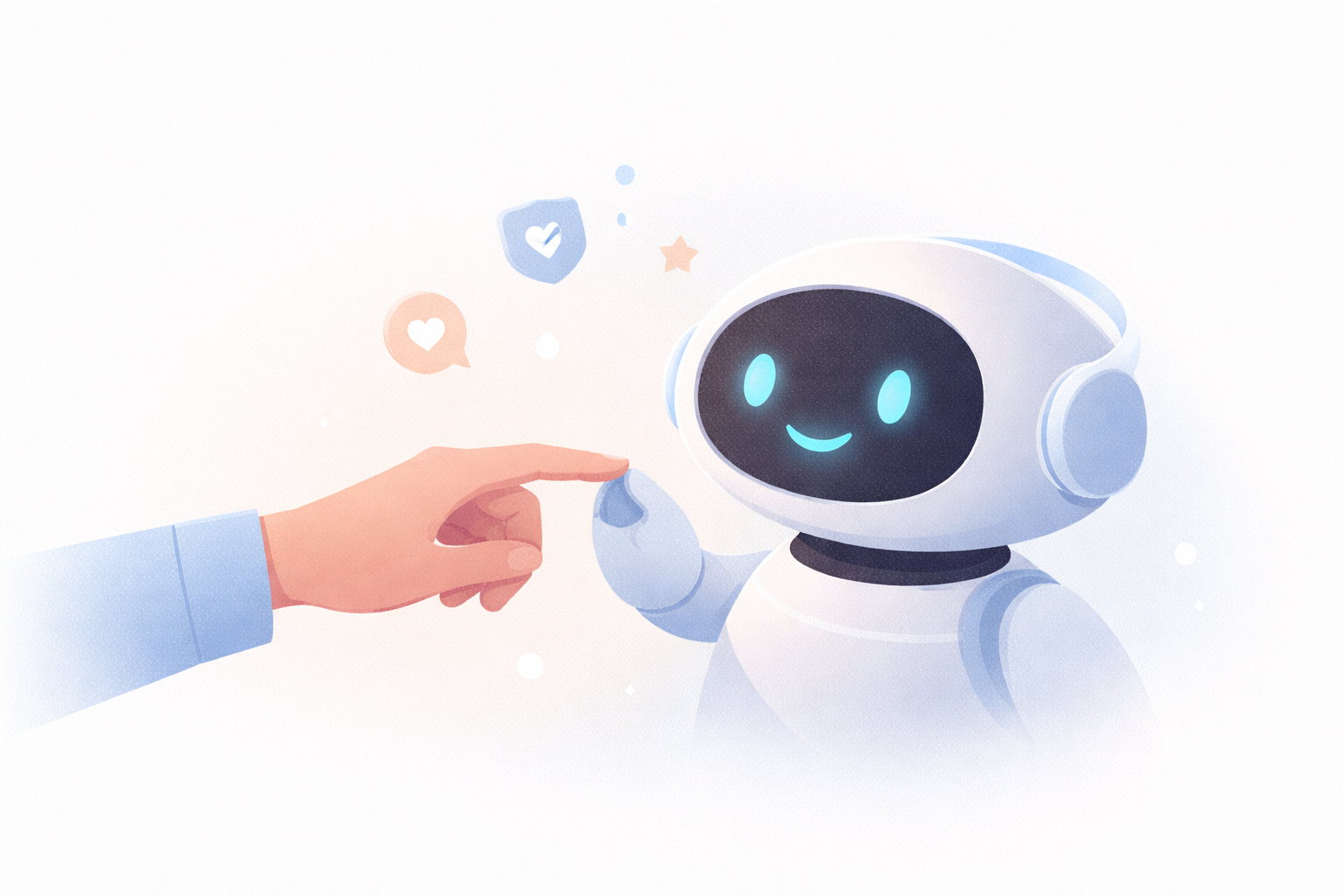
Artificial Intelligence is no longer a distant concept—it’s embedded in our daily lives. From virtual assistants to recommendation engines, AI is shaping how we interact with digital products. But as AI becomes more powerful, a critical question emerges: why do some AI experiences feel intuitive and trustworthy, while others feel cold, confusing, or even unsettling?
The answer lies in UX design.
Designing AI isn’t just about accuracy or performance—it’s about perception, trust, and emotional connection. The most successful AI systems don’t just work well; they feel human-centered.
Why Trust Matters in AI
Trust is the foundation of any meaningful interaction between humans and machines. Unlike traditional interfaces, AI systems often operate as “black boxes,” making decisions that users don’t fully understand.
When users don’t trust AI, they:
- Second-guess its outputs
- Avoid using it altogether
- Feel anxious or manipulated
But when trust is established, users:
- Rely on AI confidently
- Engage more deeply
- Accept recommendations and automation
UX design becomes the bridge between complex intelligence and human comfort.
The Human Gap in AI Experiences
AI systems often fail not because they are wrong, but because they feel:
- Opaque (no explanation)
- Inconsistent (unpredictable responses)
- Emotionless (no empathy or tone awareness)
Humans are wired for social interaction—we look for cues like tone, intent, and responsiveness. When AI lacks these, it creates friction.
Good UX design fills this “human gap.”
Principles for Designing Human-Centered AI
1. Transparency Over Mystery
Users don’t need to understand every algorithm, but they need to know:
- Why something happened
- How a decision was made
Simple design elements can help:
- Explanations like “Recommended because you watched…”
- Confidence indicators (“High match”, “Suggested”)
- Visible system status
Transparency reduces fear and builds credibility.
2. Consistency Builds Reliability
Humans trust patterns. If AI behaves differently every time without explanation, trust erodes.
Design should ensure:
- Predictable responses
- Stable interaction patterns
- Clear boundaries of capability
Even when AI evolves, the experience should feel stable.
3. Conversational, Not Mechanical
Language plays a huge role in making AI feel human.
Instead of:
“Error: Input not recognized”
Use:
“I didn’t quite get that—could you rephrase it?”
Small shifts in tone:
- Reduce frustration
- Increase relatability
- Make AI feel approachable
But there’s a balance—overly casual or “fake human” tone can feel inauthentic. The goal is natural, not theatrical.
4. Feedback Loops Create Collaboration
Human relationships are built on feedback—and so are great AI experiences.
Design for:
- User corrections (“That’s not what I meant”)
- Learning indicators (“Got it, I’ll remember that”)
- Undo/redo options
When users feel they can guide AI, it transforms from a tool into a collaborative partner.
5. Emotional Intelligence Matters
AI doesn’t need emotions—but it must recognize human ones.
UX can incorporate:
- Empathetic responses in sensitive contexts
- Tone adjustments based on user intent
- Non-intrusive support (especially in stress scenarios)
For example:
- A finance app should reduce anxiety
- A health app should communicate with care
Designing for emotional context is key to trust.
6. Control and Agency
Nothing breaks trust faster than feeling out of control.
Users should always:
- Know what AI is doing
- Be able to override decisions
- Have control over data and personalization
Clear controls = empowered users = higher trust.
The Role of Microinteractions
Trust is often built in the smallest details:
- Typing indicators (“AI is thinking…”)
- Subtle animations
- Response timing
These microinteractions:
- Signal presence
- Mimic human conversation rhythms
- Reduce perceived machine coldness
They turn AI from a static system into a responsive entity.
Avoiding the “Uncanny Valley” of AI
Trying to make AI too human can backfire.
When AI:
- Pretends to have emotions it doesn’t understand
- Mimics humans too perfectly
- Over-promises intelligence
…it creates discomfort.
The best approach is:
Human-like clarity, not human imitation
Let AI be AI—but design it with human empathy.
Designing for Trust Is Designing for Ethics
Trust isn’t just usability—it’s responsibility.
UX designers must consider:
- Data privacy transparency
- Bias in AI outputs
- Honest communication of limitations
Ethical UX builds long-term trust, not just short-term engagement.
The Future: Invisible, Trusted AI
The ultimate goal of AI UX is not to impress users—it’s to fade into the background while remaining trustworthy.
When done right:
- Users don’t question the system
- Interactions feel effortless
- AI becomes an extension of human capability
Final Thoughts
AI doesn’t need to become human to feel human.
Through thoughtful UX design—grounded in transparency, empathy, consistency, and control—we can transform AI from a mysterious machine into a trusted companion.
Because in the end, trust isn’t built by intelligence alone.
It’s built by experience.